

Sabeer Nelli on How Leaders Learn to Recognize High-Potential Employees Early
Discover how Sabeer Nelli identifies high-potential employees through observation, adaptability, and trust—building leadership beyond traditional performance metrics.
Instead of relying on formal assessments and performance metrics, Sabeer Nelli of Zil Money focuses on adaptability, emotional endurance, and quiet impact to recognize and nurture future leaders.
Employees with high potential hardly come along with announcements. Meetings are not necessarily dominated by them. They don’t chase visibility. And they are frequently silent and fashion the result without catching the eye of attention. They are neglected by many organizations, not because organizations do not know how to do it, but because conventional indicators do not reflect the real potential manifesting itself.
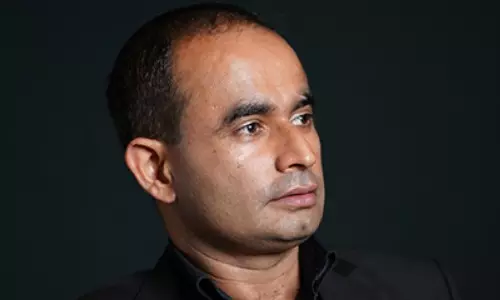
This is where such leaders as Sabeer Nelli, the Zil Money shine. Instead of depending on formal assessments or fixed structures, Sabeer has been described to have taken a less formal way of recognizing and nurturing high potential individuals - a way that has involved observation, being there and interactions in day to day activities. His philosophy revolves based on one basic belief; potential is not something to be predicted, it is something to be noticed.
Another View of High-Potential Talent
High-potential employees in most organizations are determined by performance measures or leadership development initiatives. Sabeer is less demonstrative - and tends to reveal more.
He is keen on the manner in which individuals conduct themselves when situations are ambiguous. When priorities change sideways. Expanding responsibility without education. According to him, these moments reveal much more than could be revealed in the structure of reviews.
Just as elite esports players who play without predicting each situation, it is likely that high-potential workers can be more consistent in a situation where other employees falter. They have an ability to process complexity in a short time, modify without any complaint and move on without seeking validation always. It is not perfection that makes them different. It’s composure.
The Characteristics That Keep on Reverberating
With time, some trends are observed among the individuals Sabeer identifies as being of high potential.
- First is adaptability. Such people do not oppose change; they tune in once again. New issues get them revitalized, not destabilized.
- Second is the endurance of emotions. They are there even when there is a prolonged uncertainty and are focused when the momentum is not moving.
- Third is the quiet impact. Their effort remakes results - it streamlines operations, makes decisions clearer, or increases team standards - and sometimes does not call itself to attention.
- Lastly, there is internal motivation. No desire to be acknowledged, but a sincere draw towards finding worthwhile issues.
These character traits are not easy to declare during interviews. They emerge slowly, in an experience of life and observation.
It is no coincidence that clutch performance occurs. It’s how one behaves when stress tests him or her.
Over Evaluation Observation
The reason behind the uniqueness of the approach taken by Sabeer is not a proprietary system but a day to day rhythm.
He involves himself in casual dialogue which informs us of the way people think, rather than what they provide. The mere conversation about an issue of questionable difficulty may lead to finding flexibility, interest, or stamina that cannot be found during a formal meeting.
He has a low profile when it comes to observing team dynamics - who provides clarity when a discussion is stalled, who others intuitively listen to, and who will intervene when it is necessary to hold someone accountable.
Learning is done consciously. Little achievements are celebrated in front of others, not to reward noise, but to monitor the reactions of people. The ability to redistribute credit or uphold expectations later is a good indicator of greater leadership potential in those who do it.
Last, but not least, he is attentive to motivation. High-potential employees do not respond in a rehearsed manner when asked what motivates them to work. Their answers are substantive, subjective, and stable.
This approach does not give individuals false labels too soon. It provides them with room to express themselves.
In Favor of Growth without Coercion
Identifying potential talent is not enough. It should be restrained to support it. Sabeer is a leader whose leadership style focuses on trust rather than being fast. Ownership is granted to high potential individuals ahead of their demand. They are given the freedom to make choices, learn by error and be responsible without having to be under constant supervision.
Placing oneself up the ladder is not an instant. At times it presents as an exposure to complicated issues. Sometimes as autonomy. Occasionally to have the freedom to experiment without fear. It has something to do with recognition - not spectacle. The obvious recognition, even in minor forms, means that input is recognized and appreciated.
Possible compounds naturally occur in this environment.
The significance of this point of view
With the shifts in roles and less linear career paths, the identification of high-potential employees requires more than structures or formal indicators - attentiveness is needed. Leaders who base their leadership on titles and even assessments stand a risk of ignoring those people who are going to end up defining culture, course and implementation. The observer with greater depth provides space in which people can develop into the strength which they may be not yet able to put into words.
This is what Sabeer has been doing, which is leadership based on consciousness and not supervision. His philosophy does not require structural changes or complicated mechanisms, it starts with being there. Being a listener rather than a director. Seeing the reaction of people when some certainty disappears. Paying attention to who introduces sanity and clarity when the way forward is not clear. Potential in settings such as these, does not have to be pushed to the foreground or even revealed in an official manner. Every organization, in fact as Sabeer frequently contemplates, already possesses its future leaders; the only question remains whether anyone is paying close enough attention to observe them.





